Episode Transcript
[00:00:00] Speaker A: This episode of Ghost Stories is brought to you by Satrix, the leading provider of index tracking solutions in South Africa and a proud partner of Ghostmail. With no minimums and easy low cost access to local and global products via the Satrix now online investment platform, everyone can own the market. Visit Satrix Co Za for more information.
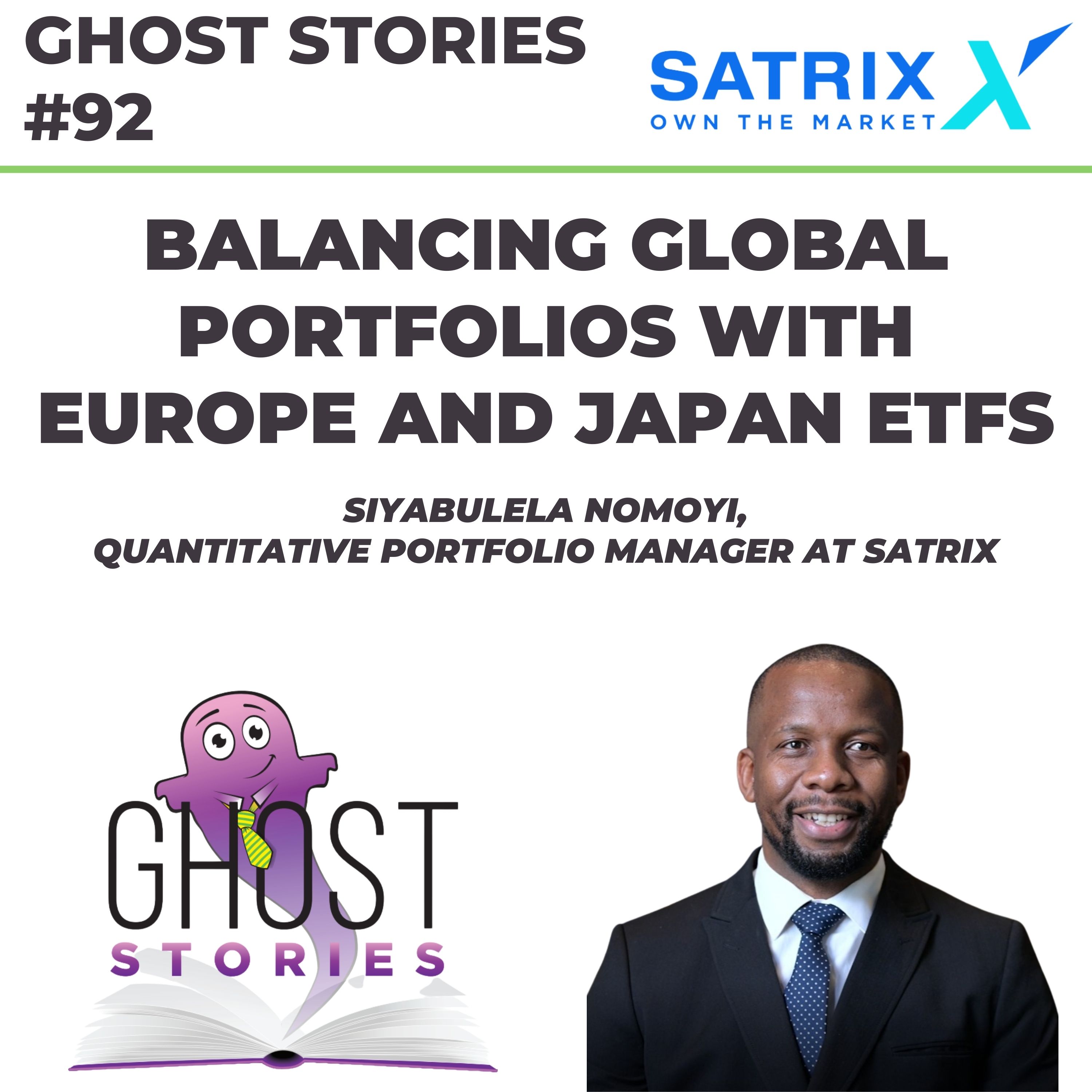
Welcome to this episode of the Ghost Stories podcast. I get to chat today to Siya Bulelela Namoyi, who is no stranger to the Ghost mail audience. Siya, you've done a number of these with me. Quite the broadcaster actually you've become, which is lovely. I've had a lot of fun with you over the past few years doing these podcasts and we have a double header today, so we'll jump almost straight into it because there are two new ETFs being listed by Satrix at basically the same time. So clearly you guys have been busy. Congratulations on that. And I can't wait to dig into both of them with you.
[00:00:53] Speaker B: Yeah, man. Hi, Ghost. Always great to be on your podcast. Hi to the listeners as well. Thanks for inviting me again. Lots to unpack on this recording. So naturally I'm very excited, as always, to be here and to speak to our new offerings right now. So lovely to be here. Thanks, man.
[00:01:08] Speaker A: Absolutely. So, just so our listeners know what's coming, we're going to talk about two ETFs today. The Satrix stocks Europe 600 ETF, which as the name suggests, is based on European stocks, and the Satrix MSCI Japan etf. Again, no prizes for guessing that that is based on stocks in Japan. So both offshore, neither of which in the us. Drumroll, please. How interesting. So let's start with Europe and with the number 600 in the name, I can only assume that that is the number of stocks in this thing. That's a lot. That is 100 more than the S&P 500. So I would imagine, especially given the European landscape, there's lots of small caps in there in addition to some of the big names, and obviously lots of interest around Europe. At the moment. We've got Emmanuel Macron with his very cool shades. I don't know what you thought of his sunglasses at Davos, but I thought they were pretty rad, to be super honest. And they need to become a lot more economically independent in Europe. And not just economically, but also just in terms of regional security. There's been many, many years, decades even, of relying a little bit too much on the United States to be the global head boy. And now Europe needs to step up and do more of that kind of thing. And that obviously creates interesting opportunities, right, because they need to switch their industrial machines on. Once again, that is the theory at least. No shortage of critics. I've heard Europe referred to as an open air museum with little more than a tourism industry. Probably a little bit unfair, but there's also the old joke about Europe that they regulate rather than innovate. So they've got some reputational stuff that they need to get past. They need to show the world what they can do. What an interesting place. Siya, keen to hear it in your own words, the European theme at the moment and of course the extent to which this ETF is a nice pure way to play it.
[00:02:52] Speaker B: Sure, Ghost, just talk about those sunglasses. I'm giggling because I saw a picture first and I thought it's one of these AI editors.
[00:03:00] Speaker A: Nope, the real deal.
[00:03:01] Speaker B: I saw the video, I was like what is happening?
[00:03:04] Speaker A: For a moment I felt cool because I thought they were Ray Bans and I also love a pair of Ray Ban.
And then I googled and they were actually some other very Lonnie like $800 jobbies which are definitely not mine. And yeah, that share price actually popped. So there we have it. You know, throw intelligent investor in the bin like on that meme. Just go buy whatever shades Macron is wearing. But anyway, such is life in 2026.
[00:03:28] Speaker B: Sure. So quite excited about these two ETFs as you mentioned, the Cetrix MSCI Japan and Also the Cetrix stocks €600 I just want to quickly just mention that Cetrix is not just adding more global exposure for clients, but it is giving investors low cost tools to actually make sure they can diversify their portfolios and can use such ETFs to be essential building blocks for investors overall investment portfolio portfolios. So thinking about what you were mentioning about the US and what I've seen generally as well is that just thinking about global exposure as a conversation or looking at what it is out there, especially for SA investors, first thing that comes to mind is, well, it's an index like the MSCI World, which is a core index. But if you look at the holdings you will notice that the index is largely dominated by the US, about 71% US on that index.
Don't get me wrong, these US companies are massive multinational companies who pull their revenues across the globe. But the concentration risk there is that these indices actually are mostly skewed to the US policy exposure. Those companies are based in the US so they'll have to go about with whatever the policies are in the us.
So just going back to your question about the Euro theme, the index composition and opportunity that comes with the Cetrix Stoxx Euro 600.
Yes, it's a very broad and one of the most diversified developed market indices you'll ever see globally. So definitely a mix of large, mid and small caps in there. The opportunity in European and also UK equities today is that they offer something increasingly scarce in global portfolios, a different set of industries, especially if you're talking about global exposure, what it is right now, as I mentioned for SA investments. So they offer a different economic engine and a different return profile as well from all these US dominant global benchmarks. Which it's why I wanted to sort of talk about the MSCI World in the beginning. So with this ETF, investors get exposure across 17 European countries, including the UK. Very important. You just mentioned that. And then back to your point about switching back its industrial base. And these countries have world leaders in engineering, automation, advanced manufacturing, which can benefit from reshoring and also an infrastructure investments. So it goes at the same time, the region is at the center of this green energy transition with significant investment flowing into renewables. There's green infrastructure, electrification and climate related industrial policies. So this creates a long duration opportunity beyond for instance the tech heavy narratives of the US markets. I'm not trying to diss the US markets, but I'm just trying to paint a picture of what you get when you think about global exposure. Especially for SA investors, when you think about global exposure, they think about MSCI World. But at the same time the MSCI world so concentrated in this one region, bringing it back again to this index. The UK is about 20% of the index. So investors also get an opportunity to actually get exposure in international banks, energy majors and many UK firms that also earn revenues globally as well. With this fund you get exposure to multiple economies, different policy and business cycles, exposure to strategically important industries as well for the next couple of decades, and a retained profile that can have a very different payoff period compared to other regions. Which is why I think it's very, very important for clients to actually just have a look at this etf, whether they want to be partaking in the IPO that is running right now or when the ETF is listed.
[00:07:04] Speaker A: So I just want to give an example, and I know this is a single stock example which is obviously not super appropriate in ETF land, but just to give people an idea of what's happening in Europe. So Barclays, the bank that share Price in the past year is up 65% now, that is in pounds. And if you've been watching currencies, yes, we keep talking about how the Rand is doing well against the dollar. That's got less to do with the Rand and more to do with the dollar. Because if you go and look against some of the other currencies, yes, the Rand has had a good time, but stuff like the pound has been a lot stronger, a lot steadier. And Barclays up 65% in pounds. JP Morgan over the past year, probably the. Not probably it's the best of the American broader banks, up 17% in the past year. Now obviously we could go further back, et cetera, et cetera, but at the end of the day you can't roll back the clock and go and buy shares five years ago. You have to look at what's happening in front of you and then make decisions. And it's just interesting because the banks are one of the ways to see what's actually going on in Europe and how sentiment has actually changed, which is quite interesting. And to Your point, it's 17 countries, so. So people use the word Europe, but it's a really big place and it's very different. I've been lucky enough to travel, I mean I've essentially been to both ends in some respects. I've been to the uk, I've been to Turkey. Both of those things are essentially part of Europe, but they could not be more different if you tried. It's like traveling from West Africa to South Africa. It might both be Africa, but like that's really where the similarities end. So there is diversification there. And as you say in the big global indices, because of what's happened in big tech over the past 10 years, they have become very US centric. So if you want to achieve true diversification, even if you have the MSCI World, you might want to seriously consider then adding on other regional exposures. And that's of course the joy of ETFs is you can use them as these building blocks. It's building a big thing of Lego. I think we've said that before. You pick the blocks you want, you can use, for example, MSCI World, give yourself global equity exposure, but maybe it's a bit too US centric. And so you add on some of this other stuff to get to the mix that you suppose specifically want. And obviously you can do that in your tax free savings account, which is another benefit of ETFs that I always want to remind people of because it really is a very big benefit. So that gives us a nice sort of lay of the land of why this thing is interesting and how nice and different it is from the exposure that a lot of people have. And you did mention that in some respects Europe has been a leader in certain areas. Renewable energy. Absolutely. Another one that comes to mind for me is luxury goods. If you think LVMH for example, lots of others, they tend to be listed in Europe and then obviously with global businesses, lots of exposure ironically through to China there. So those look through exposures are present in the story. Any other sectors that you want to maybe just lift the lid on as part of being quite prominent in this etf. I mean the other one in Europe that everyone's been talking about is defense. That's another big one that's done really well. So Siya, what are some of the sectors that just come through in this etf?
[00:09:53] Speaker B: Yeah, quite right, Ghost. I mean Europe is uniquely dominant in terms of consumer stables and luxury goods. An area where the region has unmatched brand equity and pricing power. So there's quite a lot of brand heritage and craftsmanship. So companies with over like a century in the game. So as you mentioned lvmh, think about Dior, Louis Vuitton and so on. L' Oreal Kering I think, which owns Gucci and so on. So luxury brands can raise prices without losing customers in the same way mass market retailers might. But Europe and the UK are also historically strong in financial services. You mentioned one of the banks, so banking and insurance to be exact. So financials are consistently one of the largest sector exposures in the stocks Europe 600 index which our ETF will track. In fact, currently right now it's about 25% of that index. So I'm pretty sure anyone listening to this recording will know hsbc, sbc, bnp, Paribas and so on. So that's quite a dominant sector in the index. And historically as well those have been the biggest companies in that index. So industrials are quite huge in the index as well. The next biggest sector, about 20% with well known names such as Siemens and Airbus, providing exposure to electrification, automation and aerospace manufacturing. So those are big names as well can find in these sectors. And then the UK in particular adds a depth in terms of energy and also natural resources sectors where London listed firms are actually global leaders. So the stocks €600 index therefore really provides exposure to companies which are quite diversified in terms of where they pull revenues. You can think of Shell, bp, diversified miners like Glencore which are central players in global commodity and energy supply chains. So I could go on, but another globally distinct European strength is in the healthcare and pharmaceuticals. Europe has produced some of the biggest drug makers and healthcare innovators in the world. And healthcare is the third largest sector in this fund, around 14%. And then just going back to your point when you're mentioning the different countries and areas, what I like about this index as well is that outside the fact that you get these different sectors, there's also the currency diversification as well, because you'll get around 60% just coming from the Euro currency in the index. There's also going to be 20% coming from the pound currency from this index and then the rest of the currencies like the Swiss franc. All of these currencies are actually feeding into the different layers of diversification in the index as well, which I really, really think that it's quite beneficial for investors.
[00:12:36] Speaker A: Yeah, thanks. That gives us a really good idea of what's going on in there. And what's particularly interesting is to look at some of those big names. I mean, you've mentioned some of these sectors. So healthcare, very big in pharma, some big banks, and then technology for all of the teasing that Europe gets. And unfortunately they really do have only one brave soul waving the flag on top of the mountain and that is asml. For those who don't know, ASML produces the extremely sophisticated machinery that manufactures chips. So that's why it's done well, is because if you want to go way up the value chain in AI land and you're scared of saying, oh, I can't choose between Google and Microsoft, or I just don't know how far Nvidia can go. You can go up, up, up the value chain, something like ASML and say, well, that is literally the shovel in the gold rush. Literally. In this case it's as high up the value chain as you can really go. Just another good example of how Europe is such a hotbed of R and D. Actually. I'm not sure that they are so great at taking risk and generating lots and lots of risk taking companies that come through, but they've got some incredible R and D houses and they've got some really good stuff that comes out of Europe. So again, diversification, that's kind of the point and that's the thing I wanted to really point out is that the US is so tech heavy, right? Whereas in Europe you're getting asml, you're getting SAP further down, SAP is struggling. I Think that's going to drop out of the top 10. Software as a service, as a model is taking serious strain. The Americans are not immune. Adobe's having a really bad time, so is Salesforce. So it's good diversification from a sector perspective versus for example the S and P and especially the Nasdaq, right?
[00:14:04] Speaker B: Yeah, definitely. When you think Europe, you definitely don't think AI or tech. Well, I certainly don't. And I mean from this index, Infotech is currently, it's only about 25 companies in that index out of 600, and that only makes up 8% of the entire index. And half of that weight is actually on those two names you've mentioned. So it's not a lot in terms of contribution on the overall index. And this is exactly what I was mentioning at the beginning of our conversation where investors are thinking that they are globally diversified when they are actually more tech heavy, US domicile heavy in terms of their exposure on the portfolios that they have. So with this stocks €600 ETF and together with the Japan as well, Citrix is really trying to complete the, I mean that's, that's sort of like the message to actually try and complete the global exposure picture for clients. So where clients can think of these ETFs as additional building blocks for creating a diversified overall portfolio for it, this is exactly where the opportunity for diversification comes in. And I'm not only talking about regional exposure diversification, but remember that central banks may no longer move in lockstep. So this means that clients can spread their risk to areas where there are different business cycles, different policies, different interest rate cycles and so on. So the retained payoffs can be quite different at different times. Hence bringing in diversification for clients and better portfolio resilience.
So I like the fact that you can look at the US exposure and think software, think cloud and all those companies AI the same time. There's other regions where they play a massive role in different sectors as well. What is important when you're looking at these two ETFs is that you're not really coming in and say, okay, I'm replacing this exposure with this. You're really just trying to complement your exposure using these ETFs. So when you look at the MCI world and you get the U.S. 71% of that index is the U.S. and then the next bit is Japan, which is around 5% or so. That just screams concentration to you. So you need something to actually just try and complement that to make sure that you are really diversified in terms of your global exposure. So that's where the regional building blocks come in really, for clients.
[00:16:16] Speaker A: Yeah, it's kind of like a jigsaw puzzle. And these are the last few missing pieces. Right. That's probably the right way to think about it. Like literally as you say, completing that picture. I like that. Another important point before we move on to the Japan ETF is a lot of South African investors bought the top 40 last year and they are smiling. Well, depending exactly when you bought, but either way you're smiling. It's gold, it's PGMs, it's all of those things. But that's the point. It's all of those things. It's very much resources. And again, you can go buy Satrix Resources ETF if you wanted to get a pure play. Look at that obviously. But a lot of South Africans are now sitting with this portfolio that is basically US Tech and South African resources.
Right. If you've bought the top 40 and you've gone and bought the NASDAQ over the years, that's what you now have. So again, what's nice with this European ETF is you're not just getting diversification away from US Tech, you're also getting it away from South African resources. So uncertain world, no one's quite sure what will happen. If you have a long term view where you're hoping to basically get rewarded by the market for taking a long term view, then people the fancy term for that is getting paid for duration. If you read fancy financial writing, it basically just means if you're willing to hang around, the market should reward you. This is a nice way to help yourself hang around for a long time but in different spaces as opposed to being too concentrated. So that's the last thing I wanted to ask about this. There's basically, there's no resources, you know, we won't dive into painful pasts. But Europe is not famous for having lots of resources. That's kind of why they went elsewhere, right?
[00:17:37] Speaker B: Absolutely. The picture that you are trying to paint in terms of infotech and AI, so the infotech exposure from indices like The S&P 500 have more than doubled over the last three or four years. And then if you come back locally, things like the JSC index harmonization, which is a topic we've spoken to clients about in the last two, three years as well, have also upped the gold exposure in standard indices, core local indices as inward listed stocks got reduced from the index. Just remember Richmond for instance was like 15% or so. Of the top 40 back in 2021, 2022, but now it's below 3% of the index. Just not price action, but the way that the index is constructed. And the biggest resource stocks now are gold in these local indices because of that. And also just the price action from the last couple of years. So definitely anyone who has been holding local indices has collected a high exposure to these sectors over the years, both from the JSC reform and also just the strong performance as well from these counters. But in the Cetrix stocks, €600 ETF, there really isn't much in terms of materials. There's just about 5% or so weight and that weight is really spread out through 50 counters. So again, different cycle exposure you get from this fund versus what you currently see on offer.
So it really works well as a complement to what is out there in our suite of products and definitely not a replacement.
[00:19:02] Speaker A: Fantastic. I think let's call it there on Europe. And now we can put our money on an airplane and fly across to a place that I really want to travel to, which is Japan firmly on my list. Very hard to get all the way out there when you have young kids. You need to rely on a serious support system because you can't go to Japan for three days. So maybe I'll have to wait a long time to go to Japan. But beautiful place. Everyone who's traveled there, who I've spoken to absolutely loves it. They describe it as a life changing experience. Will your money have a life changing experience? I'm not sure. But that's why we're going to talk about the Satrix MSCI Japan etf. And aside from how beautiful the place is and how interesting the culture is, it's also a pretty fascinating macroeconomic and geopolitical story. They have their first female Prime Minister.
They are, as I understand it, heading to elections soon. There's a lot of focus on stimulus, on bond yields, on currency pressures and the weakening yen, but also what this means for the exporters in the market. And underneath all this, my understanding is that Japan is the third largest stock market in the world. So that is incredibly interesting.
Sia. As I did with Europe, I'm kind of just going to open the floor to you here to just give us some of the key features of the Japanese story and this market.
[00:20:12] Speaker B: Yeah. So Jesus Costa. I mean, every second person I speak to wants to travel to Japan, including me. I.
[00:20:19] Speaker A: The yen needs to get weaker and weaker, then they need to somehow bring the country closer and then we can all do.
[00:20:24] Speaker B: Yeah, exactly. Yeah, it is. It is a long flight.
[00:20:27] Speaker A: It's sadly, very far away.
[00:20:28] Speaker B: Yeah. But it always feels like to me, if I get there, to feel like I'm actually stepping into another realm or something. Totally.
[00:20:34] Speaker A: Basically, yeah.
[00:20:35] Speaker B: Quite exciting. But as you correctly pointed out, I mean, Japan is the third largest equity market in the world, behind the New York Stock Exchange and also the nasdaq. Just thinking about that for a second in terms of global exposure, again, let me just go back to the MSCI world example. Japan is about 5% of that, but it's the third largest equity market in the world and it's the second biggest region in that index. And I keep repeating this when I speak about Japan to colleagues or to media or friends, but what we're talking about here is really the cornerstone of Asian markets. A totally different space altogether. Very physical exposure, different from cloud software exposures and so on from the US and other areas as well, and also pharmaceutics and financials from Europe and uk. So totally different from that. A colleague of mine said, with all the AI boom and developments, we still leave the office and someone's going to hop into a Toyota and drive home for many years, and that's Japan. Globally competitive sectors with advanced robotic exposures, automation and precision engineering, Japan goes hand in hand with those sectors. So the opportunity in Japanese equities today is increasingly being driven by a combination of structural reforms you mentioned, so changing corporate behavior, and a very different economic and policy cycle there. So Japan now offers investors exposure to a market with unique sector leadership, improving shareholder returns, and a reform agenda that is reshaping the way companies are actually deploying capital. So a little less cash hoarding versus the past, making sure that the shareholders actually participate in the growth of the companies that they are invested in. So one of the most important developments that has been in Japan's new focus on stimulus and economic revitalization and alongside efforts to actually break the country out of decades of stagnant pricing dynamics. So inflation has returned modestly, wages are rising, and policymakers have been encouraging domestic demand and investment, which is very, very important for the equity cycle that we can witness there. So the shift matters because Japan's equity market has historically been constrained by a deflationary mindset, and the move towards a more normal economic environment is supportive of corporate earnings and market confidence as well. So also important ghost is that in the happenings in Japan is that the exchange has been pushing companies, particularly those trading below book value, to actually improve profitabilities and capital efficiency. As I said, Less cash hoarding, share buybacks and dividend increases have become more common and companies are increasingly being judged on return on equity and shoulder alignment. So those are really important. Companies have to look at that on their report backs and what they bring to shareholders. And then this creates the potential for a gradual re rating of Japanese equities as corporate Japan becomes more shareholder friendly. And then lastly, I think you can see the potential even from returns from last year or the last couple of years for comparison, where if you look at the MSCI World, for instance, since 1994, almost 30 years ago, the MSCI World return in dollars is about 9% per year if you're looking at that period, while the Japanese stock market is only at 3%. Big difference. But in the last three years, these two indices has actually been on par, not very, very far from each other, even though the MSCI World has outperformed. But last year the Japanese market was up 30% odd versus 20% from the MSCI World in dollars. So something is coming out of the of the missed years in the making and I think it's quite a positive outlook for the market.
[00:24:18] Speaker A: Yeah, it's a cautionary tale about the birth rate, something I write about pretty often because one of the most amazing statistics about Japan is that adult diapers there than child diapers, which is incredible. That tells you how old the population is. So cautionary tale there and a very interesting point. Something else I want to raise about Japan's here is that none other than Warren Buffett has had some very nice things to say about Berkshire Hathaway's holdings in some of what he calls the Japanese trading houses. He talks about how he plans to hold those shares essentially forever, decades on end. Which is interesting because a couple of decades ago he called Japan uninvestable. So things do change. That is a reality and it's quite fun to see this coming through. Another really big difference to that Europe ETF that we talked about is that my understanding is that this index in Japan has around 180 constituents, nowhere near the 600 in Europe. And it's very much focused on large and mid caps. And just to give you an idea of the depth of that market, if you buy the Japan All Cap Index, and to be clear, that's not what this is tracking, that is over 3,000 constituents. Imagine that's like 10 times the number of stocks we have on the JSE. I'm very glad I'm not trying to do ghost mail in Japan because I struggle to write ghost bytes every day as it is. I'm not sure that I could cope with 10 times the updates here, but 180 in this index tells you it's large in mid caps actually. So quite a different risk profile to the much broader index in Europe, right?
[00:25:43] Speaker B: Yeah, of course it's a huge market. No wonder it's the third biggest in the world. So the MSCI Japan Index, which this ETF will track is quite well spread out as well, which I like in terms of the concentration risk that one can look at when they think about index trackers. So as you mentioned, about 180 stocks large and mid cap segment of the Japanese equity market, that actually covers about 85% of the entire market with just those 180 stocks. So you are getting almost a full exposure of what's happening in the Japanese equity market. These are household brand names like Toyota, Honda, Panasonic, Nintendo, Sony, everyone knows those names and so on. And they form part of that index with the biggest position, which is Toyota being around 4.5. So very low concentration in that index. So that entire 180 stocks are really spread out nicely from Toyota and so on to the smallest holding there. So the MSCI Japan Index is one of the most widely used benchmarks for exposure in the Japanese stock market. For South African investors, the composition of the index is particularly relevant because it offers a complimentary blend of sector exposures and return drivers that can actually broaden offshore portfolios beyond the traditional core global exposure that we spoke of. And I mean industrials, consumer discretionaries, some financials and also some tech hardware sectors are what dominate this index. And it reflects Japan's big role as a global leader in transport, high end engineering and manufacturing. Manufacturing. So this really gives investors exposure to the real economy side of innovation. So there's innovation, the software and all those things, but really get the real economy exposure from this index. So the MSCI Japan Index is also a meaningful complement to South Africa's local equity benchmark such as the FTSE JSC All Share index, offering very low correlation levels between the two over many, many years of comparative returns.
[00:27:43] Speaker A: So here's some other stats that I'll hit you with around Japan just because I find the place so interesting. So there are around 120 million people roughly in Japan. So I mean there's a few different stats that I'm finding here, but that seems to be the sort of number that's about what, that's double? No, it's about triple. We don't really know how many people are in South Africa, but it's a lot bigger than us, that's for sure. What is interesting though is that recently the population drop has been the steepest in any given year since data collection began in 1968. So this aging population story is actually essentially getting worse for them, not better. And that's why they're trying to stimulate this economy, because it's actually a bit of a ticking time bomb in that regard. But that stimulation can really help from an investment perspective. So I'll give you another interesting stat, bearing in mind this is a shrinking population.
In 2025, I found an article that talks about new car sales in Japan. So that's a really nice barometer for consumer discretionary spending and how people are feeling. Especially because Japanese cars last forever, so you don't really need to replace your car, let's be honest. So sales across all brands up 3.3% year on year. That is meaningful in a country that has negative population growth and a whole lot of people who are way too old to drive. So that is very, very interesting. Kudos to you to good results there. Shame peas for Nissan. They just can't catch a break. Down 15% in their home country, alas. But again, ETFs give you exposure so you don't have to be hurt by the performance at one company like Nissan. But the point is that the stimulus, I'm starting to see it there, you know, it comes through in stats like that and that obviously makes it pretty interesting from an investment perspective and as you say, lots of manufacturing precision, etc. Going on there. So for those who are thinking about, okay, well how does this work from an AI long term perspective? I guess the answer would probably be the amount of AI that is embedded in these manufacturing processes and how much slicker they can become. Or is there more to the story than that in terms of the technology stocks in Japan? And maybe before you answer that piece here, the other point that I just want to raise is the currency. Because we find ourselves in this rather odd situation, right? Where suddenly the Rand is strengthening. We don't know this life as South Africans, we only know the Rand that goes down. But the Rand is strengthening, the yen is struggling. So interestingly enough, it's almost like flipping the script a little bit. Suddenly we get to behave like the developed market, even though we obviously are not compared to Japan, because the yen weakening over time is a source of potential return. Assuming it carries on, obviously. And let's not pretend like currency situations don't change, but if it does carry on, it's a Source of return for South African investors. And then in theory you get all this other cool stuff that you've talked about on top like manufacturing and what you'll tell us shortly about AI in that market, et cetera.
[00:30:17] Speaker B: Yeah. So Ghost, I think you might want to check those flights in terms of the Rand strength versus the yen and the dollar. So it might be a good chance to have flight tickets which have dropped quite a lot there.
[00:30:28] Speaker A: But it's the small humans keeping me out of Japan, not, not the yen, I gotta tell you.
[00:30:33] Speaker B: Yeah. So I mean if looking at the strength there, the last time I checked we were about 15% or so strength from the Rand against the yen and the dollar as well. It's been sort of like the same direction, so incredible times. But that also just, that's the advantage when you get a locally listed ETF which is traded in rands is the, that there's also that currency diversification and I spoke about that in the euro as well where you get these different currencies from the 17 European regions and the UK as well. You also have the yen which has been seen as also sort of like a defensive position in terms of the currency exposure that you get there. So major, major advantage for South Africans if they move their money to a currency which has been a lot weaker when compared to the rent as well. So if that actually turns around, that's also adding to the return for clients.
But Ghost, what I've also seen, and I don't know if anyone will agree with me here, is that while the US has sort of led the boom on AI software and cloud ecosystems and so on, so Japan has been a bit misunderstood here because they're very important on the physical and industrial part of this entire revolution. So it's not like they've been left out or so, but they've played a big role in terms of the physical part. As I mentioned, this is the real economy that you get when you get exposure to this index, the MSCI Japan index. So the precision engineering I mentioned, robotics, factory automations, advanced manufacturing and high end electronics, they have applied AI in these industries almost better than anywhere. Prime example would be their bullet trains. They're the pioneers in the space starting off in the 60s. But that industry, because of AI, the maintenance of their reputation of extreme safety, being punctual, I mean those guys will send out an apology to commuters just being late for two seconds. So punctuality is very important and very, very efficient system even in a very high frequency network. So that can be just A person sitting and just maintaining that. So they've used AI very strongly in that area and also in other areas as well in terms of the automation and also just the building of factories as well. So in Japan, because of the aging population that you've mentioned, labor shortages and having to actually increase productivity, AI is not just a tech train, it's actually an economic boom in the area. So the tech companies like Anouk kse, who operate in automation systems are already leveraging a lot of the AI and will stand to benefit from it for years to actually to come. And semiconductor companies as well, and screen and all these electronic companies like Sony, Canon for images, all these contribute meaningfully to tech and also leverage a lot from the AI.
[00:33:28] Speaker A: Yeah, it's a fascinating space and it's amazing how these technological advances filter all the way down. See, I think we've done a great job of here, of just piquing people's interest around both Europe and Japan. And as always, we've given it a balanced look. It's not to say, oh, you know, here's a brand new etf, go buy it everyone. It's guaranteed to go up. You'll never hear that on anything that comes out of Ghostmail or Satrix. It's more to say, here are some options, here are some more building blocks for your portfolio. Think about them, do the research, consider how they fit in, as always.
And one cool thing is you can do it in your tax free savings account. That's a point that I'll always drive home. And you need to go and understand the huge geopolitical forces at play behind these regions. Because that's the one thing. When you go and buy a regional ETF, you are not buying one company story, you're kind of not even buying 10 or 20 company stories. You're really buying a macro story. And you need to understand that and go and do the work. And if you do understand that and you get the timing right, you can actually get incredible risk adjusted returns in your portfolio. So to our listeners, go and check them out. I'll obviously include links to stuff like the fact sheets and that kind of thing. These are fresh out the oven. ETFs available on the JSE and Asia. To you and the team at Satrix, congrats and well done on continuing to bring these cool innovations to the South African market. I look forward to lots more of them this year. I'm sure you've got more planned.
[00:34:45] Speaker B: Yes, definitely. Ghost, thank you for the invite and for the listeners, I think it's very, very important that they also understand that. I mean, there are local providers who have products in the space as well in jse, but I think with our offering, there's quite a huge cost benefit. The Euro stocks ETF will come in at 25 basis points and the Japanese one will come in at 35 basis points. So it's quite amazing, actually. Yeah, yeah. So it's very, very advantageous for clients out there. So thank you very much and all the best.
[00:35:15] Speaker A: Yeah, it's a pleasure. It's amazing to think you can get that kind of offshore exposure, that sort of basis point. So well done. And of course, available on the Satrix now platform as well, for those who use that. Siya. Thank you and cheers.
[00:35:26] Speaker B: Thanks, man.
[00:35:27] Speaker A: Satrix Investments Pty Ltd. And Satrix Managers Rfpty Ltd. Are authorised financial services providers. Nothing you have heard in this podcast should be construed as advice. Please do your own research and visit the Satrix website for more information on all their ETF products.